


Around the world, local news publishers vanished. In the space of 20 years, news publishers saw their share of the advertising market drop from 93 percent to 8.34 percent. Legislators looked the other way and killed media plurality with their laissez-faire approach. Member of the European Parliament Paul Tang argues that we need to ensure […]
Debriefing the digital decade
The current decade is meant to become Europe’s Digital Decade. Yet, Europe is facing a twin transition: green and digital. If successful, this transition will radically change the face of the European economy. But whereas the goal of the green transition is clear – carbon neutrality by 2050 – this is not the case for the digital transition.
What could a European economy for the digital age look like, and where will it differ from the current European economic model and from the currently predominant digital development models propagated by the US and China?
Although the EU has been producing piles of strategic papers for the digital transition, we are still lacking answers to these key questions. In this dossier, several authors explore these challenges, and suggest a progressive path forward.
Load more
Today, when we talk about digital sovereignty, we also mean political and economic sovereignty and the threats coming with the hyper-technological 21st century. For Europe, being a ‘regulatory superpower’ is not enough anymore. The EU needs to remain relevant as a global economic power through its own technological innovation. However, for Europe, competing on innovation […]

The European Commission’s digital strategy, called the Digital Compass 2030, focuses on technology-oriented goals and refers to cloud, chips and ‘unicorns’ (start-ups valued at over 1 billion USD). Although cloud computing and chips have been major innovations and are still innovated incrementally, they both are much more than that: cloud is crucial infrastructure, and chips […]

Europe faces a foundational moment, as it debates how to put the digital transition onto a path that is in the interest of citizens and society. Regulatory efforts focus on reigning in Big Tech, reducing potential harms, and increasing market competition. This is a necessary step. But if Europe wants to develop its own, sovereign […]
Contrary to appearances, the US has an interest in the EU’s drive to regulate Big Tech and to create a more sustainable, social, and democratic digital economy. By supporting the EU’s digital agenda, the US could help pave the way for global standards to rein in Big Tech and for tech reform at home. […]
To address the global challenges that have been exacerbated by the Covid-19 crisis, the EU needs a digital transformation that will achieve more than a single market. The European Commission says what is needed is an ecosystem based on trust, but this can be achieved only if all stakeholders are involved, including workers. Worker participation, […]
Related articles
Regulating AI: workers’ intellect versus Big Tech oligarchs
If there is any compelling realisation about the protracted attempts in the US and EU to regulate emerging technologies, it is that Big Tech oligarchs do not care about the well-being of the individual, or the workers, the socio-economy or democracy, unless civil society and public authorities force them to do so. Disruption is said […]
Tightening the guardrails for AI
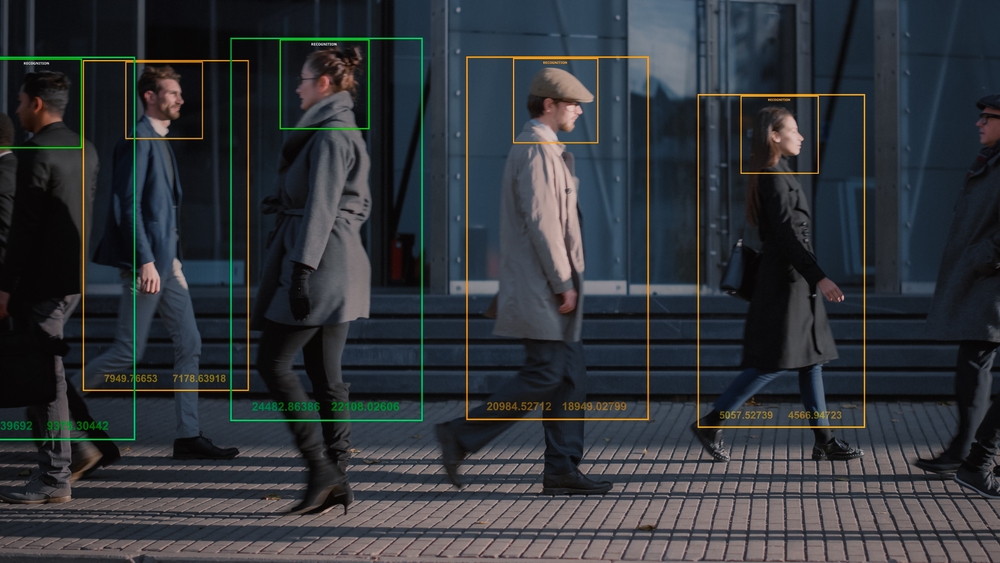
On June 14, the European Parliament took a decisive step towards the adoption of common rules for EU member states on artificial intelligence (AI), approving by a very large majority of 499 votes in favour – and with only 28 against and 93 abstentions –, the negotiating mandate to be taken to the trilogue with […]

Future of work: between global, digital, local and green
The analysis of the future of work is sandwiched between two megatrends. On the one hand, there is the renewed hyper-globalisation in the services sector, reinforced by progress in digitalisation and Artificial Intelligence, and on the other hand, there is a relocation of production and services linked to the imperative of the green transformation. Two […]